Lisbon AI Summit 2026 – Our Key Summit Takeaways from
Earlier this month, our team attended the Lisbon AI Summit 2026 with a simple objective: cut through the noise and understand what is actually working in the world of enterprise AI.
Over the last year, AI has dominated conversations across every industry. New models, new tools, and new promises appear almost daily. Yet for organizations building real products and operating critical business systems, the question is no longer what AI can do. The real question is how to apply it in a way that delivers measurable value while remaining secure, scalable, and maintainable.
That is exactly why Lisbon AI Summit stood out.
Rather than focusing on hype, many of the most valuable sessions explored the practical realities of adopting AI within software engineering, architecture, delivery processes, and enterprise environments. The discussions aligned closely with challenges we encounter every day while designing and building solutions for our clients.
The Conversation Around AI Has Changed
One of the strongest themes throughout the summit was the clear shift from experimentation to execution.
A year ago, most discussions focused on AI capabilities. Today, organizations are asking different questions:
- How do we integrate AI into existing business processes?
- How do we govern AI responsibly?
- How do we maintain quality and security while increasing delivery speed?
- How do we build systems that continue to scale as AI becomes part of everyday operations?
The focus is moving away from technology itself and towards operationalizing AI in a way that creates long-term business value.
For us, this was one of the most important observations from the event. Successful AI adoption is becoming less about choosing the latest model and more about integrating AI into well-designed systems, workflows, and delivery processes.
AI Agents Are Powerful, But They Still Need Engineering Discipline
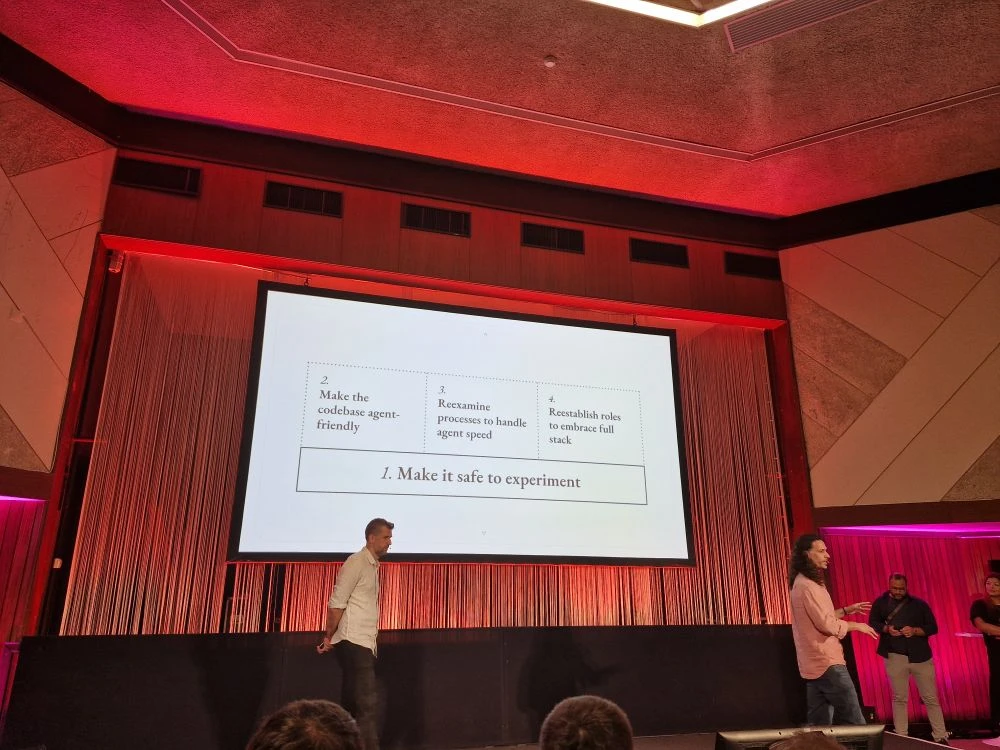
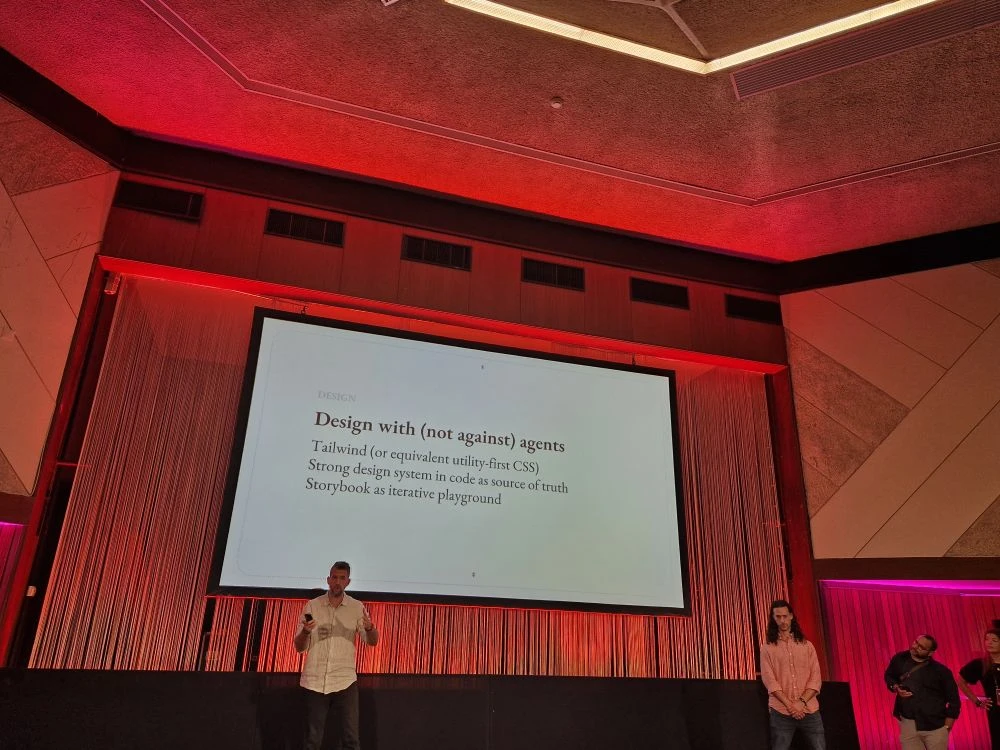
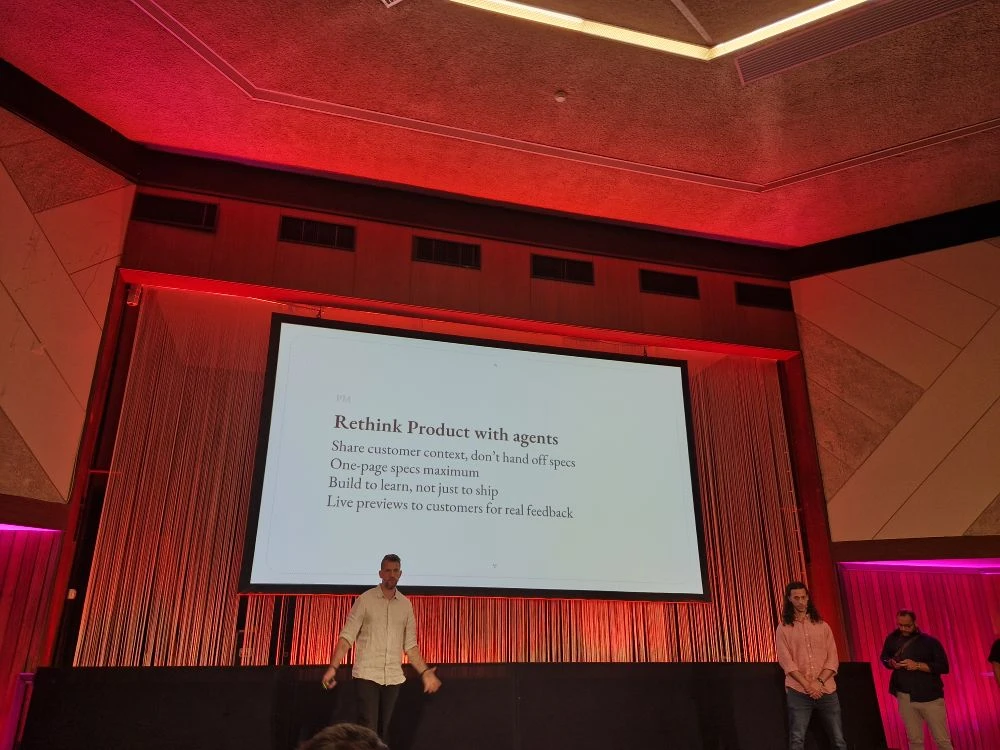
One of the most thought-provoking sessions came from Bruno Bergher and Jack Cohen from Roo Code.
The discussion challenged many of the assumptions currently promoted around autonomous AI development.
While AI agents have become remarkably capable, realistic benchmarks show that they still struggle with many of the same challenges development teams encounter every day. They can lose context, misunderstand requirements, overlook architectural implications, ignore hidden dependencies, or produce code that appears correct while introducing security or maintainability issues.
The key takeaway was not that AI agents are ineffective. Quite the opposite.
The most successful teams are redesigning their development practices to help AI agents succeed. Clear specifications, structured workflows, strong CI/CD pipelines, automated testing, and review processes all become even more important when AI enters the development lifecycle.
In many ways, AI is amplifying the strengths and weaknesses that already exist within a software delivery process.
Specifications Are Becoming Strategic Assets
Another standout session from Daniel Sogl focused on specification-driven development.
The proposed workflow was straightforward:
Specification → Plan → Tasks → Code
What makes this approach powerful is that it creates clarity before implementation begins.
A strong specification defines three critical elements:
- Intent: what is being built and why
- Constraints: what must and must not happen
- Acceptance criteria: how success will be measured
Without these elements, AI systems tend to drift away from the intended outcome.
“Whoever writes the specification is now the programmer.”
While intentionally provocative, it highlights an important reality. As AI becomes increasingly capable of generating implementation details, the ability to define requirements, business rules, architectural constraints, and expected outcomes becomes even more valuable.
For organizations adopting AI, business analysis and architecture are becoming more important, not less.
AI Changes the Workflow, Not the Need for Expertise
Another recurring theme throughout the summit was that AI is fundamentally changing how software is built.
The question is no longer whether AI should participate in software delivery. The question is where it creates the most value and where human expertise remains essential.
AI can:
- Generate code faster than ever before
- Assist with documentation
- Accelerate research
- Help structure requirements and automate repetitive tasks
However, experienced engineers are still needed to make architectural decisions, evaluate trade-offs, define constraints, assess risks, and ensure long-term maintainability.
This aligns closely with how we approach AI at Starlight 2.
We use AI as an accelerator for software engineering, architecture, business analysis, documentation, and knowledge management. Tools such as GitHub Copilot, Cursor, Claude Code, and OpenCode help our teams work more efficiently, but they complement engineering expertise rather than replace it.
The real value comes from combining AI capabilities with deep technical knowledge and practical experience.
Enterprise AI Is Still Mostly an Engineering Challenge
One of the most practical sessions was delivered by Hugo Ferreira from Feedzai, a company with extensive experience running machine learning systems in production.
His message was refreshingly simple:
Most production AI challenges are not AI challenges. They are engineering challenges.
- Monitoring
- Observability
- Testing
- Deployment
- Rollback strategies
- Security
- Governance
These are the same disciplines that have always determined whether enterprise systems succeed or fail.
This resonated strongly with us because it reinforces something we have long believed: successful AI initiatives require the same engineering rigor as any other critical business system.
The model itself is only one piece of the solution. The surrounding architecture, infrastructure, processes, and governance determine whether that solution can operate reliably in the real world.
What This Means for Our Clients
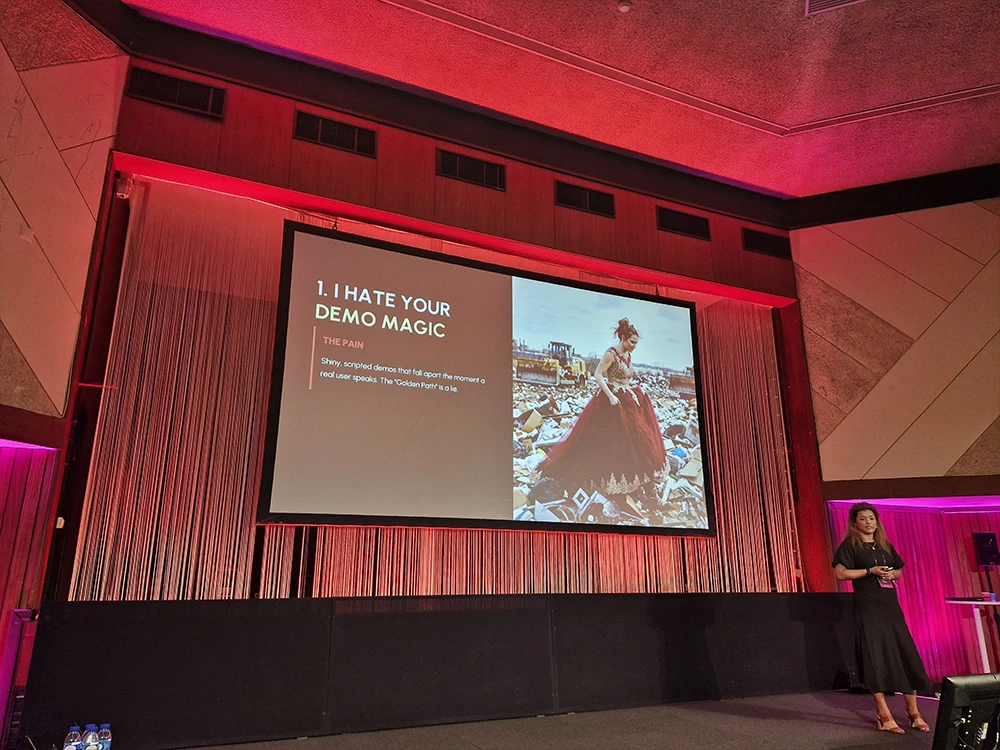
The biggest opportunities in AI are not necessarily found in flashy demonstrations or experimental projects. They are found in practical improvements to everyday operations.
- Reducing repetitive work
- Making internal knowledge more accessible
- Improving software delivery
- Supporting faster decision-making
- Automating routine processes
- Enhancing customer and employee experiences
The organizations that create the most value from AI will be those that successfully integrate it into the processes that already drive their business.
That requires more than technology. It requires architecture, governance, process design, and a clear understanding of business objectives.
Final Thoughts
The Lisbon AI Summit confirmed a principle we strongly believe in: AI does not replace engineering excellence. It amplifies it.

The organizations that will gain the most value from AI are not necessarily those adopting the most tools, but those combining strong architecture, disciplined delivery processes, deep domain knowledge, and practical AI adoption.
As AI continues to evolve, the fundamentals of building secure, scalable, and maintainable systems remain unchanged. The opportunity lies in bringing these worlds together, and that is exactly where we see the future of enterprise software engineering.