Digital Sovereignty in Practice: How Starlight 2 Builds Cloud Infrastructure Without Vendor Lock-In
Digital sovereignty is being discussed across Europe more than ever. Governments, public institutions, and large companies are taking a hard look at where their data lives, who controls their infrastructure, and how dependent they are on global cloud platforms. For many, this is a new conversation. For Starlight 2, it has been our direction for years.
Digital Sovereignty in Europe: Why Cloud Infrastructure Is Being Rethought
Across Europe, there is a clear shift toward reducing dependency on a small number of global cloud vendors. This is not about politics. It is about risk, control, and accountability. When critical data, identity systems, and AI workloads run in environments governed by different legal and geopolitical frameworks, control becomes a core business requirement.
- infrastructure located within the European Union
- open and transparent technologies
- systems aligned with GDPR and sector-specific regulations

Real-world examples already exist: Schleswig-Holstein is removing Microsoft from public administration, Denmark?s Ministry of Digital Affairs is transitioning to open office tools, the French National Gendarmerie has relied on Linux at scale for years, and the Austrian Armed Forces are using open-source solutions with European hosting. This shift is not theoretical. It is already happening.
Digital sovereignty is not an ideological choice. It is an architectural and business decision about control, risk, and long-term resilience.
Starlight 2
What Digital Sovereignty Means in Practice
At Starlight 2, we do not treat digital sovereignty as an abstract idea. We turn it into a set of concrete operational questions.
- Where is your data located: Physically and legally within the European Union.
- Who controls your infrastructure: In a way that is transparent, auditable, and GDPR-aligned.
- How flexible is your architecture: So you are not locked into one provider?s pricing model and business decisions.
Our goal was never to replace every global tool. The goal was to build a stable European foundation for critical systems, while still using global services where they genuinely make sense.
Our Path: From AWS to Infrastructure Under Our Control
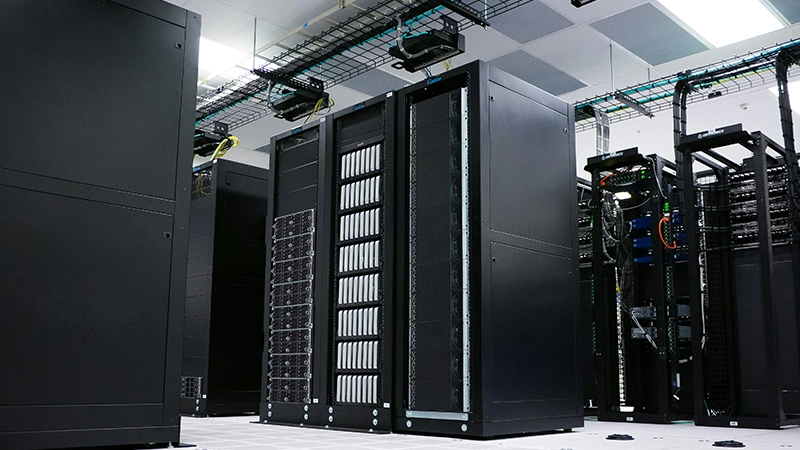
A few years ago, most of our infrastructure ran on Amazon Web Services. Over time, we identified the risks of that level of dependency, especially for clients in regulated industries. So we made several key moves.
Infrastructure Migration to a European Cloud
We moved our cloud server infrastructure to Hetzner. This gave us EU data residency, a significant cost reduction, and stable, reliable performance. Today, a large share of our production systems runs in a European environment.
CI/CD Under Our Own Control
We migrated our CI/CD pipeline from cloud services to a locally managed environment. That gives us full control over build processes, safer management of keys and releases, and predictable operating costs.
A Pragmatic Cloud Strategy
We did not move everything. We still use AWS for object storage because there is currently no European alternative at the same level of maturity and reliability. But that layer is isolated behind application logic running in EU infrastructure. Digital sovereignty is not dogma; it is the outcome of well-reasoned technical decisions.
From Docker to a Stable High-Availability k3s Kubernetes Cluster
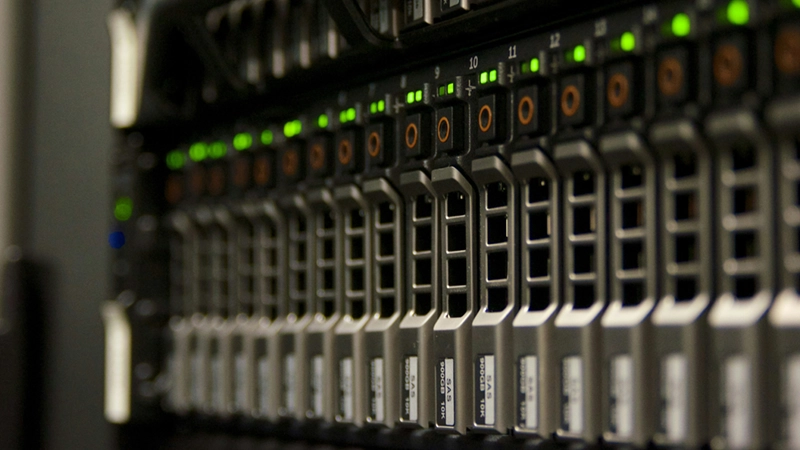
At first, we used a classic Docker-based approach. As our systems grew, we needed high availability without a single point of failure, easier scaling, and standardized monitoring. That is why we moved to a high-availability k3s Kubernetes cluster.
- a lightweight yet robust orchestration platform
- reliable management of microservices and background workloads
- simpler scaling and maintenance
Stability Through Observability and Monitoring
Our infrastructure stack includes Prometheus for metrics, Loki for logs, Jaeger for distributed tracing, and Traefik for traffic management. We also implemented backup strategies aligned with our k3s environment. The result is fewer incidents, faster troubleshooting, and more stable operations.
AI Workloads Under Control
When sensitive data is involved, we do not run AI and machine learning workloads in the public cloud. Those systems run in local or controlled European environments. This gives us stronger data control, security, and regulatory compliance. For us, AI is part of infrastructure architecture, not an isolated add-on service.

What This Means for Clients
- Cost efficiency: EU infrastructure and k3s significantly reduce costs while maintaining performance.
- Operational stability: fewer incidents, faster recovery, and more reliable service delivery.
- Regulatory alignment: data and systems remain within EU boundaries.
- Vendor independence: critical systems are not tied to a single provider?s roadmap and commercial model.
Digital Sovereignty as an Ongoing Decision
Digital sovereignty is not a one-off migration. It is an ongoing architectural decision. Our next steps are clear: further reduce reliance on non-European components where feasible, expand the use of open-source and European tooling, and enable flexible AI deployment across local and hybrid environments. Our objective is simple: build systems that can operate globally while staying under your control.
Where Is Your Infrastructure Really Running?
If you are evaluating how many of your systems are business-critical, where they physically run, and how dependent you are on a single vendor, this is the right time for a concrete assessment. At Starlight 2, we help organizations analyze current infrastructure, identify optimization opportunities, and design EU-first or hybrid architectures.
Get in touch for an infrastructure and digital sovereignty assessment. Build a platform that is not only fast, but also stable, compliant, and sustainable in the long run.